
If you’re dealing with a fistula, you already know how uncomfortable and frustrating it can be. The constant discharge, pain, and fear of recurrence make it more than just a physical problem—it affects your daily life and confidence, too.
As an Ayurvedic doctor, I often meet patients who are confused about their treatment options. Questions like “Should I go for surgery?”, “Will it come back again?”, “Is there any permanent cure?”, and “Will medicines work?” are common concerns.
Let’s break it down in a clear and honest way.
What is a Fistula?
A fistula is a hollow tube with two openings, filled with infection. It connects the inside of the anus with the skin outside. Most often, it starts from an infection or abscess that doesn’t heal properly. Over time, this tunnel keeps draining pus or fluid, leading to repeated swelling, pain while sitting or standing, foul-smelling discharge, and frequent recurrences.
Why Fistula Needs Proper Treatment
Fistulas rarely heal permanently with medicines alone. In most cases, a procedure-based treatment is needed. But which treatment is best for you?
Types of Fistula Treatments (Modern Approach)
1. Fistulotomy
The most common surgery, where the tract is opened, cleaned, and excised. It has a high success rate and is suitable for simple fistulas. Healing may take weeks to months. However, it’s not ideal for complex cases due to risks to surrounding muscles.
2. Seton Placement
A surgical thread is placed in the tract for continuous drainage. It helps control infection and is used in complex cases, often in stages. It’s not a complete cure by itself.
3. LIFT Procedure
A modern technique where the tract is tied and closed internally to protect anal muscles. It’s good for deep fistulas.
4. Laser Treatment
Uses laser energy to close the tract. This means less pain and faster recovery, but recurrence can happen if the tract isn’t completely treated.
5. Fibrin Glue/Plug
Seals the tract with special material. It’s non-cutting and less invasive, but has a lower success rate in complex cases.
The Biggest Problem with Surgery
Even after advanced surgery, patients often complain, “Fistula came back” or “The pus discharge started again.” This is usually because the root infection isn’t fully removed, there are multiple hidden tracts, or tissue healing is weak.
Ayurvedic Perspective on Fistula
In Ayurveda, fistula is called Bhagandar. It’s seen as a result of chronic infection, poor digestion, and toxin accumulation. Ayurveda focuses on root-cause healing, not just physically removing the tract.
Ksharsutra Therapy – The Ayurvedic Gold Standard
Ksharsutra therapy uses a medicated thread, coated with herbal alkaline medicines, placed in the fistula tract. This thread gradually cuts, heals, and debrides the tract, removing infection from the root and promoting natural healing. Patients should also do Sitz baths and Kegel exercises to aid recovery.
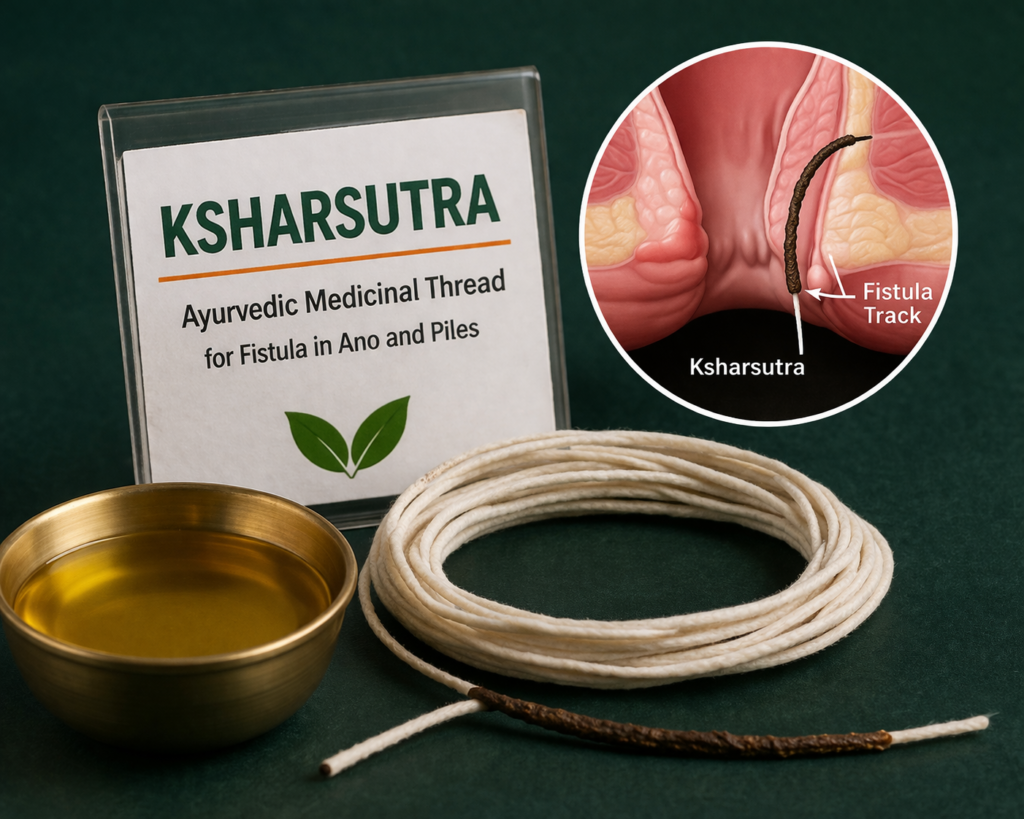
Why Choose Ksharsutra?
- Decreases chances of recurrence
- Minimally invasive
- Preserves sphincter muscles and reduces the risk of incontinence
- No stitches or hospitalization
- Allows you to continue your daily activities
The cost of Ksharsutra treatment depends on the complexity and length of the fistula, as well as how chronic it is.
Common Mistakes During Treatment
- Ignoring continuous discharge and only suppressing pus with medicines
- Not following a proper diet
- Opting for surgery without understanding the consequences
- Relying solely on home remedies
- Not changing wound dressings regularly
Treatment Journey
- Consultation: Detailed evaluation and history
- Examination: Physical and digital rectal exam, MRI if needed
- Procedure: Ksharsutra is placed after consent
- Follow-up: Thread is changed every 7-10 days, tract is cut gradually, healing time varies
Pain During Treatment
Mild discomfort is common during the first day or two of Ksharsutra change, but most patients can continue working normally. Compared to the pain and discomfort of recurring pus, the Ksharsutra journey is much more manageable.
Why Patients Prefer Ksharsutra
- Minimal cutting
- Very low recurrence
- Preserves muscles
- Safe for complex fistulas
- Usually OPD-based (no major hospitalization)
Modern vs Ayurvedic Treatment – Quick Comparison
- Simple fistula: Modern surgery may work well
- Complex or recurrent fistula: Ayurveda (Ksharsutra) is often more effective
Key Factors for Success
- Proper diagnosis
- Choosing the right technique
- Experienced doctor
Final Words
If you’re suffering from a fistula, don’t ignore it or delay treatment. Early treatment leads to easier and faster recovery. Remember, the goal is not just temporary relief, but permanent healing without recurrence.
For more information or to seek treatment, consult a qualified doctor who understands both modern and Ayurvedic approaches.